Hutech/Canon Spectrum-Enhanced
Digital SLR Cameras


Home
Camera Price List
IR Photography Options
Installing
Front Filters

PDF [191K]


Hutech now offers Canon digital SLR cameras which have been spectrum enhanced to make full use of the bandwidth of the Canon CMOS sensor through the use of custom designed filters. New models include the consumer level 10-megapixel XTi (400D) and the pro 8-megapixel 30D.   Older models have included the 6-megapixel Digital Rebel (300D) and 8-megapixel Digital Rebel XT (350D), as well as the professional level 8-megapixel 20D.

Standard Canon cameras, like most modern digital cameras, incorporate IR-cutoff filters which also cut into the deep red end of the visible spectrum, greatly reducing response to a scientifically important part of the visible and IR spectrum.

Also now available as a spectrum-enhanced DSLR is the full-frame (35mm format), 12 megapixel Canon 5D

These enhanced cameras are brand-new units, enhanced for scientific/engineering applications such as astrophotography or general near infrared photography. A Hutech warranty covers the original camera and enhancement for 12 months.


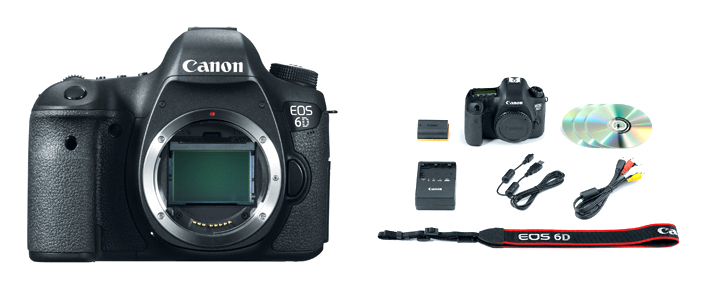
Canon Rebel XT body with standard accessories.
 

XTi (400D)


30D


Enhancement Options

Two basic options are available at the time of order:

  • Canon IR filter replaced with enhanced H-alpha filter
  • Canon IR filter replaced with clear (IR-pass) filter

 
Enhanced Filters

The Hutech enhanced filters consist of a permanently mounted rear filter (RF) which replaces the standard Canon IR filter, mounted close to the imaging sensor.

The second part of the enhanced filter set consists of an optional front filter (FF) in a holder mounted in front of the camera's viewing mirror. This filter may be easily changed by the user.

 
Rear Filter Details

The rear filter (RF) exactly matches the light path of the standard Canon IR cutoff filter that it replaces (two filters in the case of the 400D), enabling the camera's autofocus (AF) to work properly. Options are a Clear filter, or astronomical bandpass filter. Both filters are fully anti-reflection (AR) multicoated and have been designed by IDAS, utilizing the UFP and IGAD technologies to insure undegraded and extremely durable optical performance.

  • Clear filter - This passes all bands (including IR) and includes a fully multi-coated anti-reflection (AR) coating effective between 380 and 1000 nm. This allows the user to fully utilize the sensor's sensitivity into the IR band, but requires an IR blocking filter to be inserted at the front-mounted position for most "normal" use.

  • Astronomical filter - This UV/IR blocking filter allows the astronomically important H-alpha to be recorded, and is the most cost-effective way to adapt the Canon digital cameras for astronomical use but does not allow for IR photography. It features a very sharp cutoff at the band edges to insure that reflections between the filter and image sensor are minimized. An additional filter in the front-filter position or the camera's custom white-balance function may be used to achieve proper color balance for non-astronomical photography.

 
Front Filter Details

The front filters are mounted in a holder which goes between the camera's lens bayonet and the viewing mirror. These may be quickly and easily inserted or removed from the camera body as required by the user.

Front-mounted filters do not affect the camera's autofocus operation but, when installed, preclude the use of Canon EF-S lenses or some lenses designed for APS-C sized sensors. These filters also affect the closest focusing distance for each lens. An alternative is to use a conventional front-of-the-lens type screw-in filter. VLC filters are available in 58, 67, and 77 mm sizes.

These filters need not be specified and ordered at the time of purchase of an enhanced camera.

Astronomical Applications:

Filter Thickness
(mm)
Description
LPS-P2** 1.05 Same as IDAS LPS-P2 externally mounted filters
LPS-V3** 1.05 Nebula enhancement filter passing comet C2, H-alpha, H-beta, and OIII lines while blocking light pollution sources, yet allows for natural color balance corrections. A separate UV/IR blocking filter or LPS filter is recommended for complete cutoff of the UV and IR regions.
UIBAR* 1.05 Same as the rear-mounted UV/IR blocking filter.
H-alpha* 1.05 Bandpass is 8 nm FWHM, with a unique flat topped and off-centered passband to accomodate off-axis targets. A separate UV/IR blocking filter or LPS filter is recommended for complete cutoff of the UV and IR regions.
HEUIB** 1.40 This is a daylight-balanced filter which still allows for H-alpha transmission. This allows the Canon 20D auto-white-balance (AWB) and internal color balance adjustment feature to be used for normal daylight photos. When used with the 300D, the custom white balance (CWB) must be used for daylight photos.

* IDAS filters incorporating UFP and IGAD features.

** IDAS filters incorporating MBT, UFP, and IGAD features.


Daylight Photography:

Filter Thickness
(mm)
Description
HEUIB** 1.40 This is a daylight-balanced filter which still allows for H-alpha transmission. This allows the Canon 20D auto-white-balance (AWB) and internal color balance adjustment feature to be used for normal daylight photos. When used with the 300D, the custom white balance (CWB) must be used for daylight photos.
VLC 1.00 This is a daylight-balanced filter which matches the Canon original filter and thus allows all internal automatic color balancing functions to work properly.
VLC NA Conventionally mounted VLC filters (as described above) for mounting in front of camera lenses, available in 58mm, 67mm, and 77mm diameters.

** IDAS filter incorporating MBT, UFP, and IGAD features.


FAQ's answered:

  • Can I use EOS010 (no filter) with my refractor? -- For use with refractors, configuration EOS011, EOS012, or EOS010 may be used. In the case of EOS010 (no filter) a separate IR blocker or IDAS LPS filter should be mounted in the telescope's optical path.
     
  • Why should I get a knife-edge focuser option for my Canon astro-camera? -- For night sky photography, the knife-edge focuser has long been acknowledged as the method of choice to consistently achieve sharpest focus for film photography without depending on the observer's visual acuity.
     
    For digital cameras, it is possible to take test photos and examine the result immediately for best focus either manually or with third-party computer software. But this requires having a computer with your imaging system, complicating setup and adding fragile, power-hungry equipment to the imaging system as well as adding data transfer delays. This is not a problem for permanent observatory setups but a negative for portable imaging. In this case the knife-edge focuser is the recommended accessory for simplicity and to assure consistently sharp photos.


Accessories:


EOS201: Timer remote control (Modified TC-80N3). Cord length is ~130 cm.
 
EOS202: Knife-edge focuser.


EOS204: Thermometer option for Canon cameras (must be specified at time of filter installation)


EOS203: DC12V adapter (cigarette plug to EOS) for operation of 20D, 10D, D60, D30, and Rebel cameras.


Sample Images*:

*No dark frames or flat field frames applied to any images.

Comparison: Standard filter vs. no filter


Click for a larger view.
Borg 76ED Images

Images taken with Borg 76ED and 0.85X focal reducer. Each is a combination of four 5-minute exposures. Click images for larger views.
Borg 45ED Images

Images taken with Borg 45ED and 7885 focal reducer. Click images for enlarged views.

More sample images taken with the modified Canon Digital EOS camera can be seen on the Borg astrograph page.